Why More Batteries Die in London Summers Than Winters (And How to Prevent It)
Summer Heat, Autumn Failures: Why Batteries Die in September–November
Everyone expects battery problems in January. But September through November? That catches people off guard.
Here’s what’s happening: summer heat damages your battery. You don’t notice because the battery still works fine in warm weather. Then autumn arrives, temperatures drop, and the weakened battery suddenly fails. You blame the cold—but the damage was done in July.
Quick reality check: heat is often harder on batteries than winter because it accelerates internal breakdown, evaporation, and corrosion—and the failure often shows up later when temperatures drop.
Why heat destroys car batteries
Cold weather gets the blame because it’s when batteries fail. But heat causes the actual damage.
Accelerated chemical breakdown
Inside your battery, lead plates sit in sulfuric acid. Heat speeds up the chemical reactions—which sounds good until you realise it also speeds up degradation.
Electrolyte evaporation
The fluid inside your battery evaporates in heat. Modern sealed batteries reduce this, but it still happens. Less electrolyte means less capacity and higher internal resistance.
Grid corrosion
Heat causes internal lead grids to corrode faster. It’s invisible from outside the battery, but it progressively reduces the battery’s ability to hold charge.
Thermal stress cycling
London summers can hit 30°C+ in the day and drop to 12–15°C at night. That expansion/contraction stresses the internal structure. After months of cycling, micro-cracks can develop in the plates.
The “summer damage, winter failure” pattern
This is the timeline seen every year:
July–August: Battery degrades due to heat. Still works fine because engines start easily in warm weather and batteries operate efficiently.
September–October: Battery might be down to 70–80% capacity, but mornings are still mild so nobody notices.
November–December: First cold snap (3–5°C). Your already-weakened battery loses more effective capacity in the cold—now it’s below the threshold needed to crank the engine.
Result: you blame the cold, not realising the battery was fatally weakened months earlier.
London-specific summer battery risks
Beyond general heat damage, London creates unique battery-killing conditions:
Congestion zone traffic
Stop-start traffic in 28°C heat is brutal. Under-bonnet temperatures can climb and electrical demand stays high (fans, air con, restarts), accelerating failure risk.
Parked in direct sun
Street parking often means all-day exposure. A car baking in sunlight pushes temperatures far beyond the air temperature.
Summer holiday = stationary battery damage
Away for 2 weeks? The battery sits self-discharging while heat accelerates internal wear. You return to a battery that “seems fine” until the first cold morning.
Start-stop systems working overtime
Modern start-stop systems cycle constantly in London traffic. In summer heat, that repeated cycling compounds wear.
Warning signs of summer battery damage
You won’t usually see dramatic symptoms in summer. The signs are subtle:
Headlights slightly dimmer at idle (increased internal resistance).
Air conditioning takes longer to cool (battery/charging system under strain).
Engine cranks fractionally slower on hot afternoons (it happens).
Battery warning light flickers occasionally, then goes off.
These symptoms often disappear once you start driving (alternator takes over), so they’re easy to ignore—until winter arrives.
What to do (simple timeline)
June–July: Prevention window
If your battery is 4+ years old, replace it now. Not because it’s failing today, but because it may not survive another winter after summer heat stress.
During heatwaves:
Park in shade when possible.
If parked for extended periods, disconnect the negative terminal (prevents parasitic drain).
Avoid very short journeys (battery doesn’t recover from starting).
Before summer holidays:
Take the car for a 30-minute drive before parking it for 2+ weeks.
Consider a trickle charger if you’ll be away 3+ weeks.
Ensure terminals are clean and tight (poor connections are worse under load).
September–October: Testing window
Battery still “working fine” after summer? Don’t assume it’s healthy—get it tested in September. Most places can test in minutes and tell you real capacity.
If it’s below 80%, replace it before winter.
Start-Stop batteries + summer heat
If your car has automatic start-stop, you must use an EFB or AGM battery.
Typical start-stop battery lifespan:
Normal conditions: 4–5 years
London conditions with summer heat: 3–4 years
If your start-stop battery is 3+ years old and it’s been through a hot summer, replace it before winter.
Check your battery age now
Battery age action plan:
0–3 years: Monitor, no action needed.
3–4 years: Test in September, consider replacement.
4–5 years: Replace before November.
5+ years: Replace immediately (borrowed time).
Book your battery replacement
Avoid the winter breakdown rush. Replace your aging battery now, on your schedule.
Enter your vehicle registration to see instant pricing and time slots.
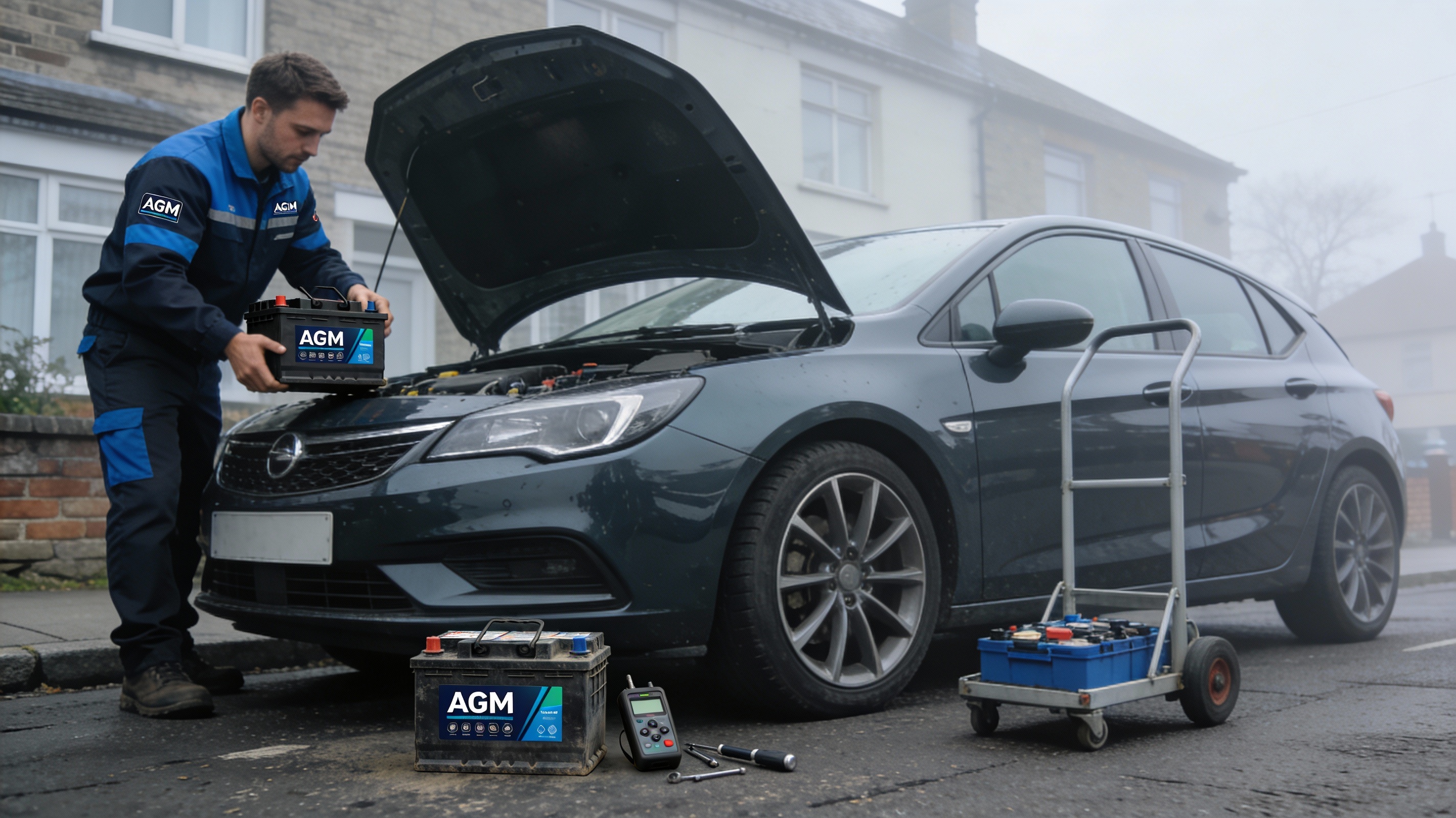
We bring the correct battery (including AGM/EFB for start-stop) and fit it at home, work, or any London location.